Full-Stack Concert Booking App
Project Background
StageSeat was developed as a solo project for my web development module to demonstrate a comprehensive understanding of the full-stack lifecycle. The objective was to build a functional concert ticketing platform from scratch with no frameworks: PHP for server-side logic, MySQL for data persistence, and HTML, CSS, and JS for the user interface.
By avoiding heavy frameworks or CMS tools, I aimed to master the fundamental mechanics of the web—specifically how to handle session states, process form data securely, and manage relational databases in a multi-user environment. The result is a lightweight, high-performance application designed to simulate the high-pressure experience of securing event tickets.
1. User Interface & Responsive Design
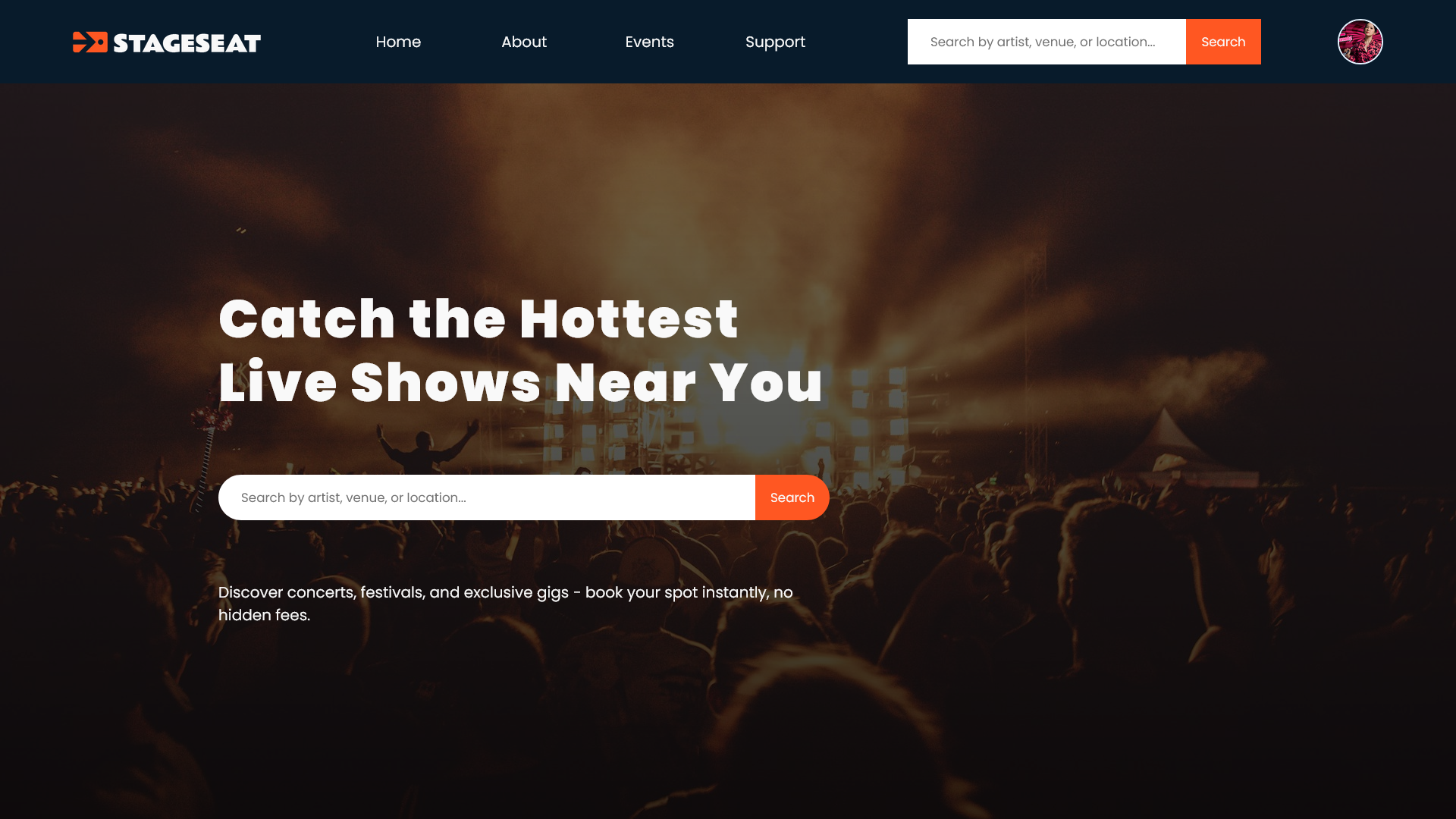
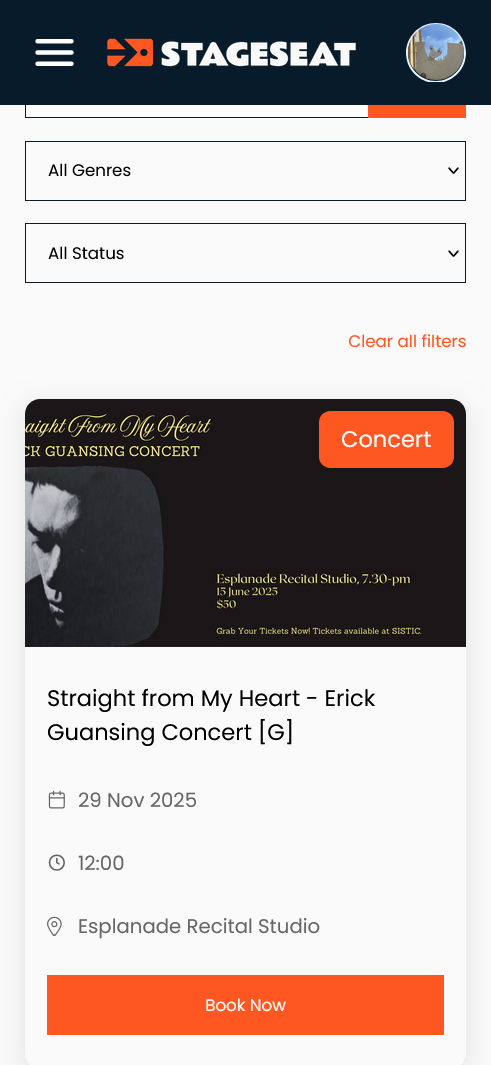
To ensure a modern look and feel, I utilized HTML5 and CSS for the layout, combined with Vanilla JavaScript for interactive elements. I focused on creating a responsive grid system that allows users to browse events seamlessly across different screen sizes. JavaScript was used to enhance the user experience, providing real-time feedback during the booking process and handling dynamic UI changes without requiring full page reloads where possible.
2. Server-Side Logic with Pure PHP
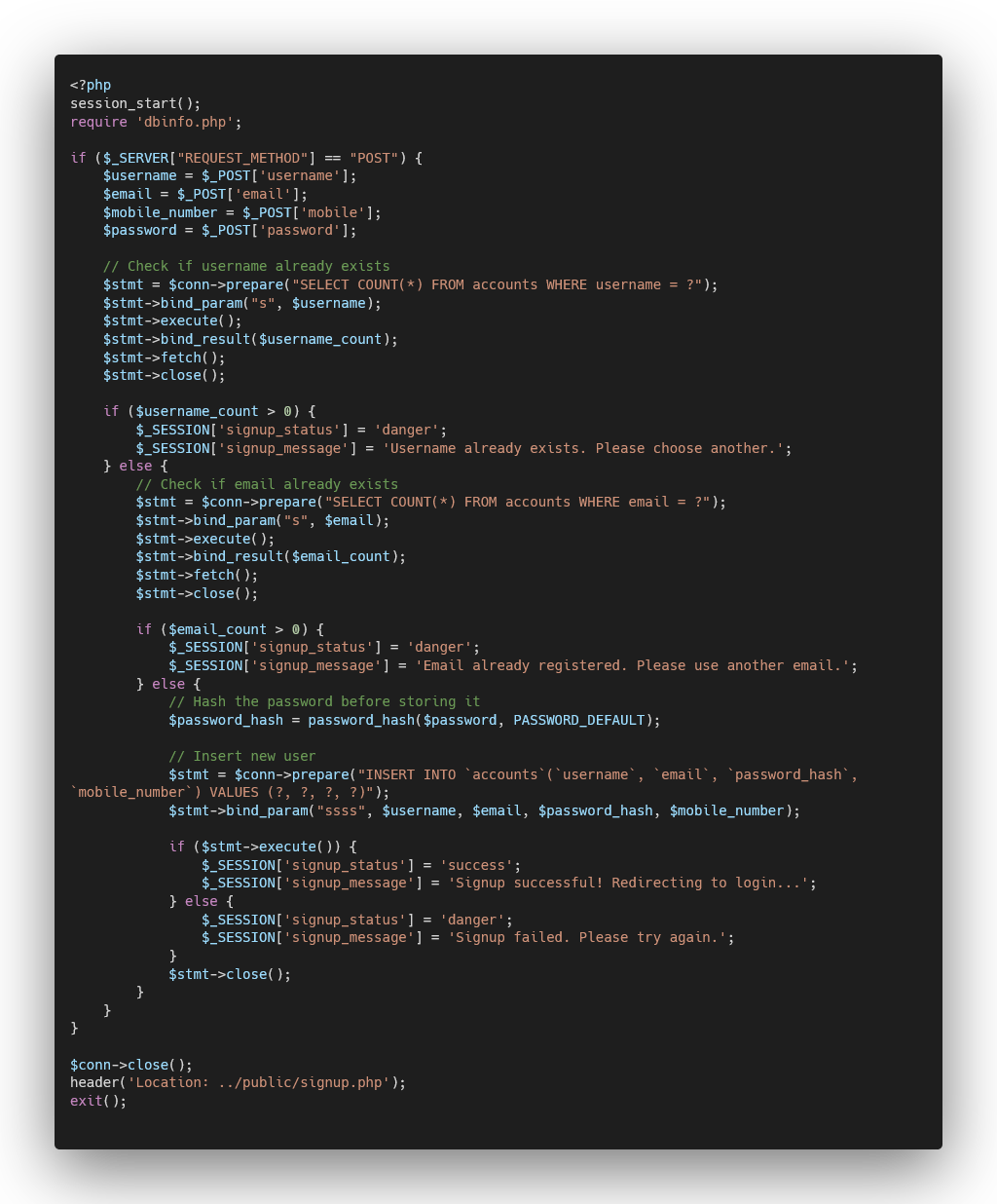
The backbone of StageSeat is built using pure PHP, handling all server-side logic. This includes user authentication, session management, event browsing, and the booking process. I implemented secure password storage using hashing algorithms and ensured that user sessions are managed effectively to prevent unauthorized access. Form submissions are processed with input validation and sanitization to protect against common web vulnerabilities such as SQL injection and XSS attacks.
3. Relational Data Management (MySQL)
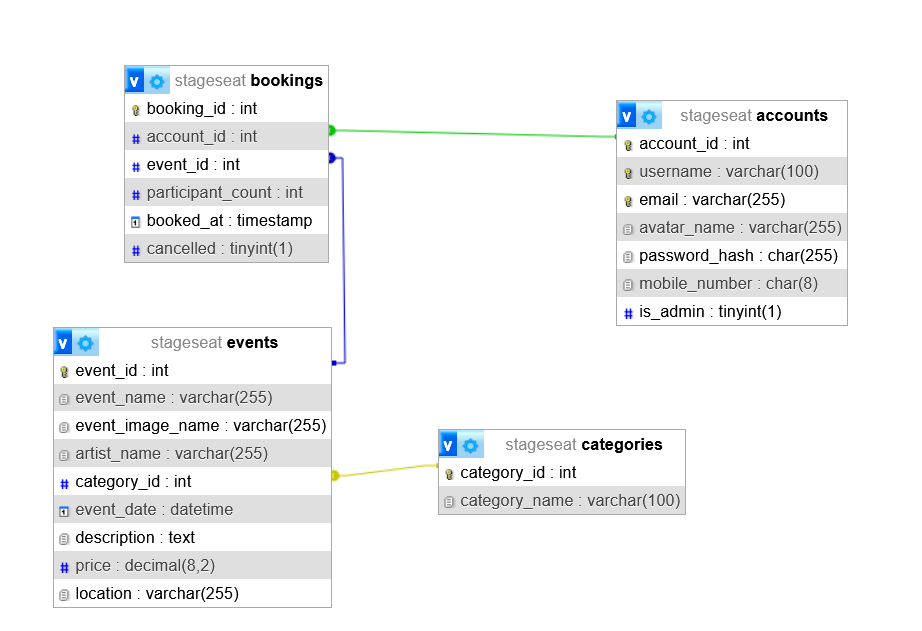
Data integrity is the most critical factor in a ticketing system. I designed a MySQL database with a relational schema to link users, concerts, and bookings. To protect the application from common vulnerabilities, I utilized PHP Data Objects (PDO) with prepared statements. This ensured that every database query—whether searching for a show or finalizing a seat reservation—was executed securely, preventing SQL injection and ensuring that ticket inventory is updated accurately in real-time.
4. User/Admin Dashboard & CRUD Operations
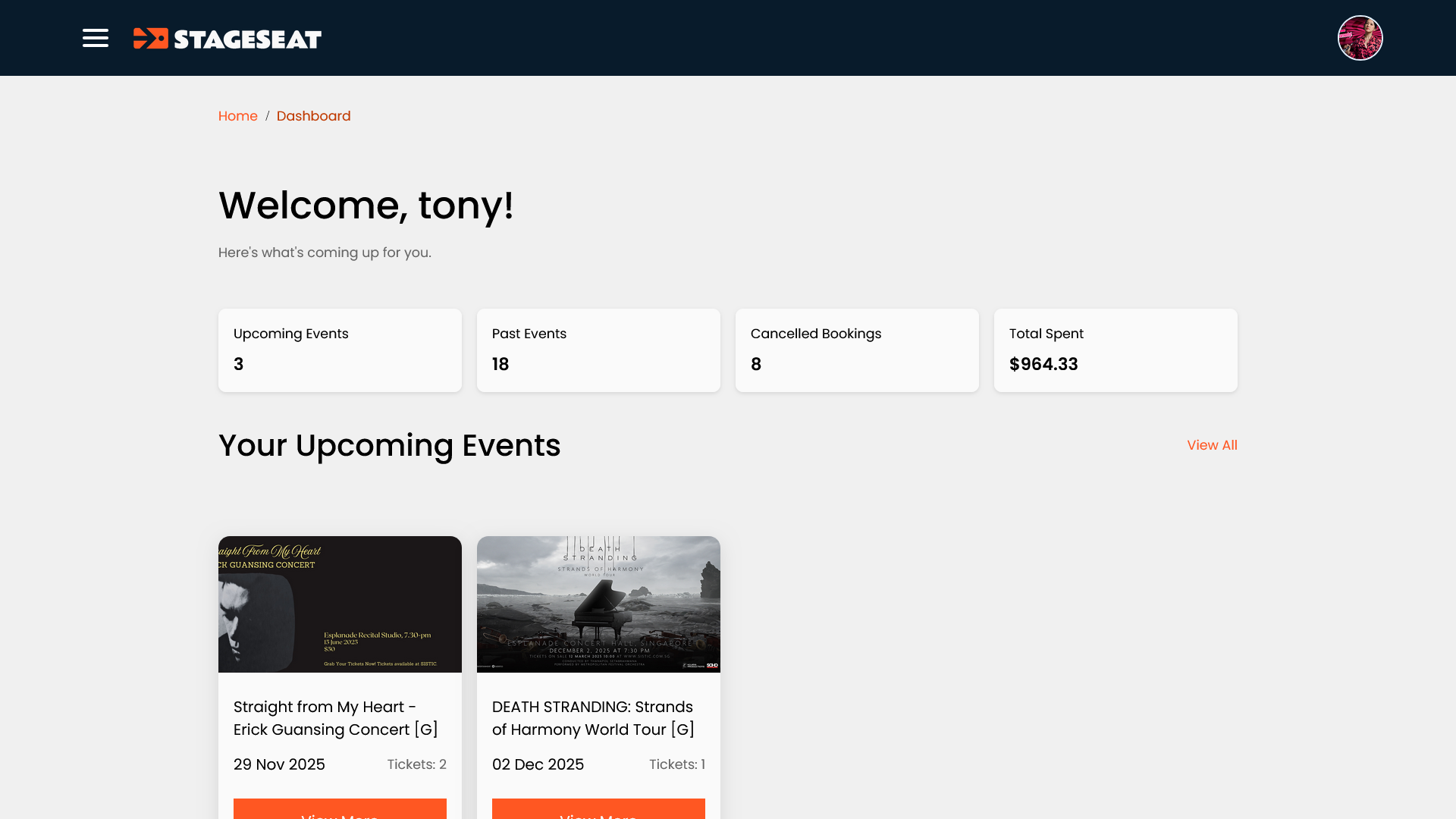
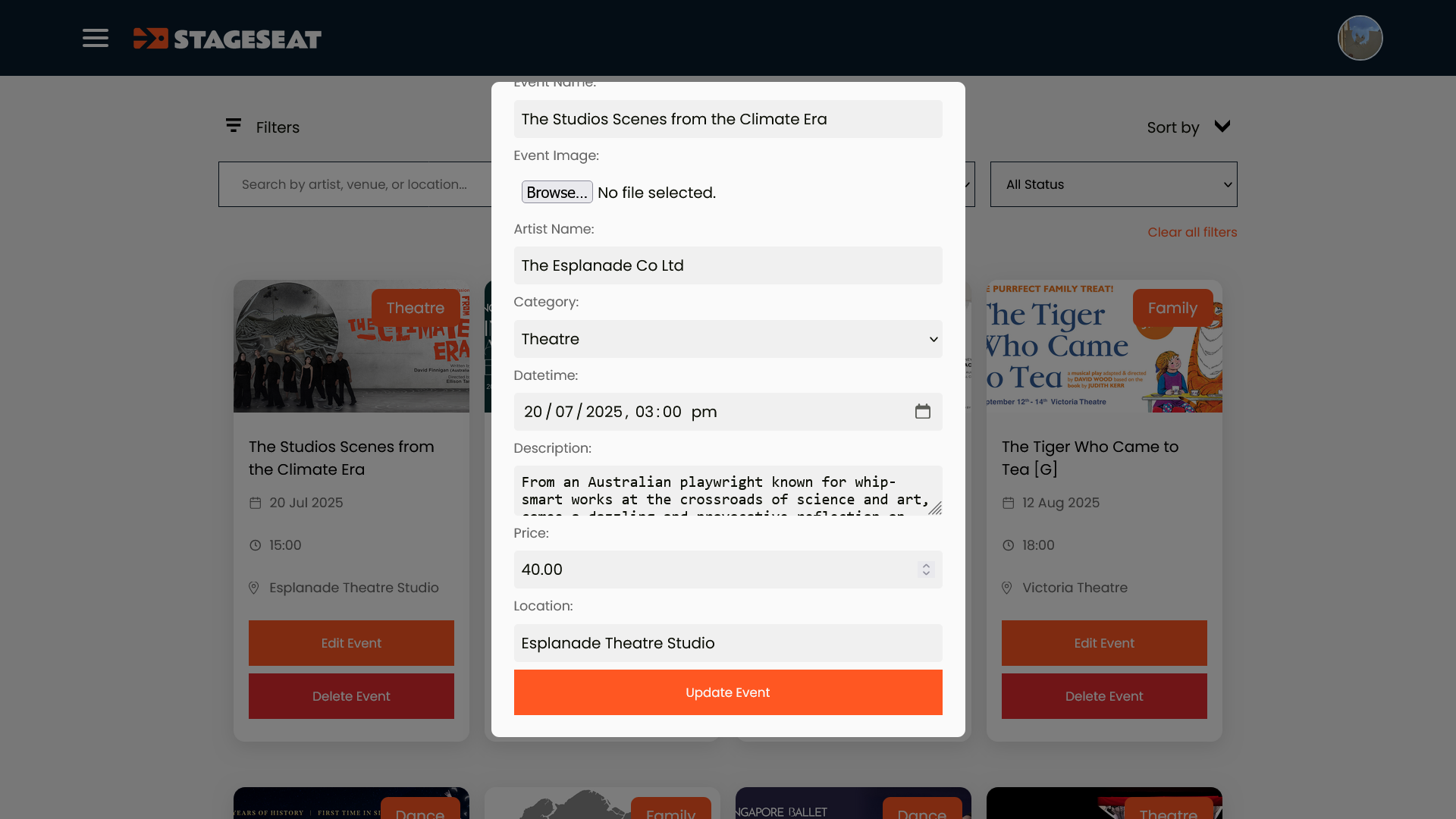
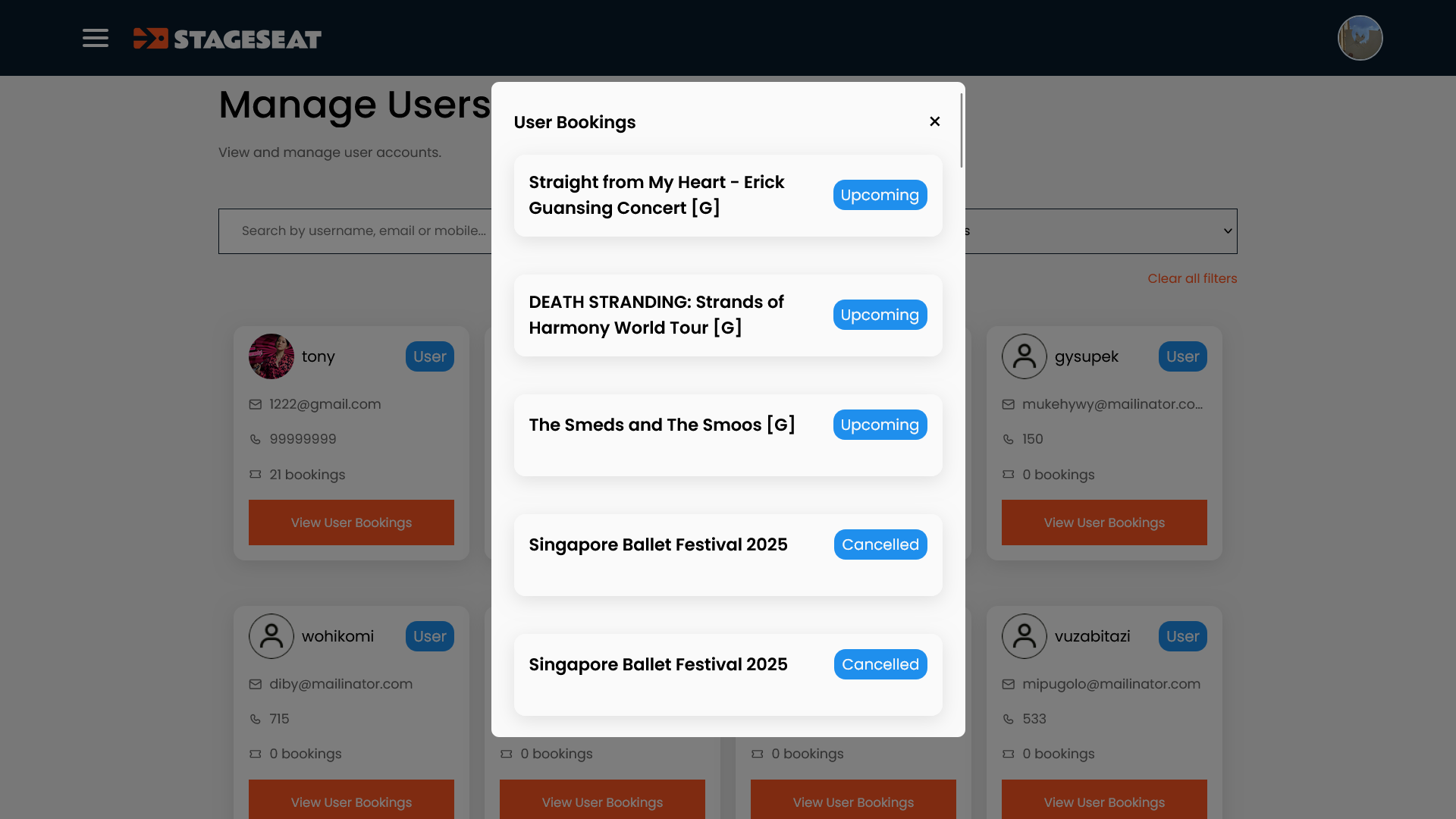
To complete the application ecosystem, I built a custom Dashboard for users and administrators. For users, the dashboard provides an overview of their bookings, with options to modify personal details and view past events. The admin dashboard offers comprehensive control over event management, user oversight, and booking analytics. Both dashboards are built with usability in mind, featuring intuitive navigation and real-time data updates through efficient CRUD operations implemented in PHP.
Building this management layer taught me how to handle file uploads for concert posters and how to restrict access to sensitive administrative routes using server-side session validation.
Scroll for more
Lessons Learned
StageSeat was a foundational project that bridged the gap between basic coding and system design. Working solo required me to act as both the Frontend Developer and the Database Administrator, which provided a holistic view of how different technologies must harmonize to create a reliable product.
The most valuable takeaway was learning to appreciate the "under the hood" complexity of web security. Implementing manual input validation and session handling reinforced a security-first mindset that I now carry into my Cloud and DevOps studies. It proved that while frameworks are powerful, having a strong foundation of the underlying languages such as PHP, JS, and SQL are essential for troubleshooting and building truly optimized infrastructure. for troubleshooting and building truly optimized infrastructure.